
Comprehensive technical exploration of the challenges in targeting ion channels with antibodies, their structural...
Blog Search
Latest posts
View all →-
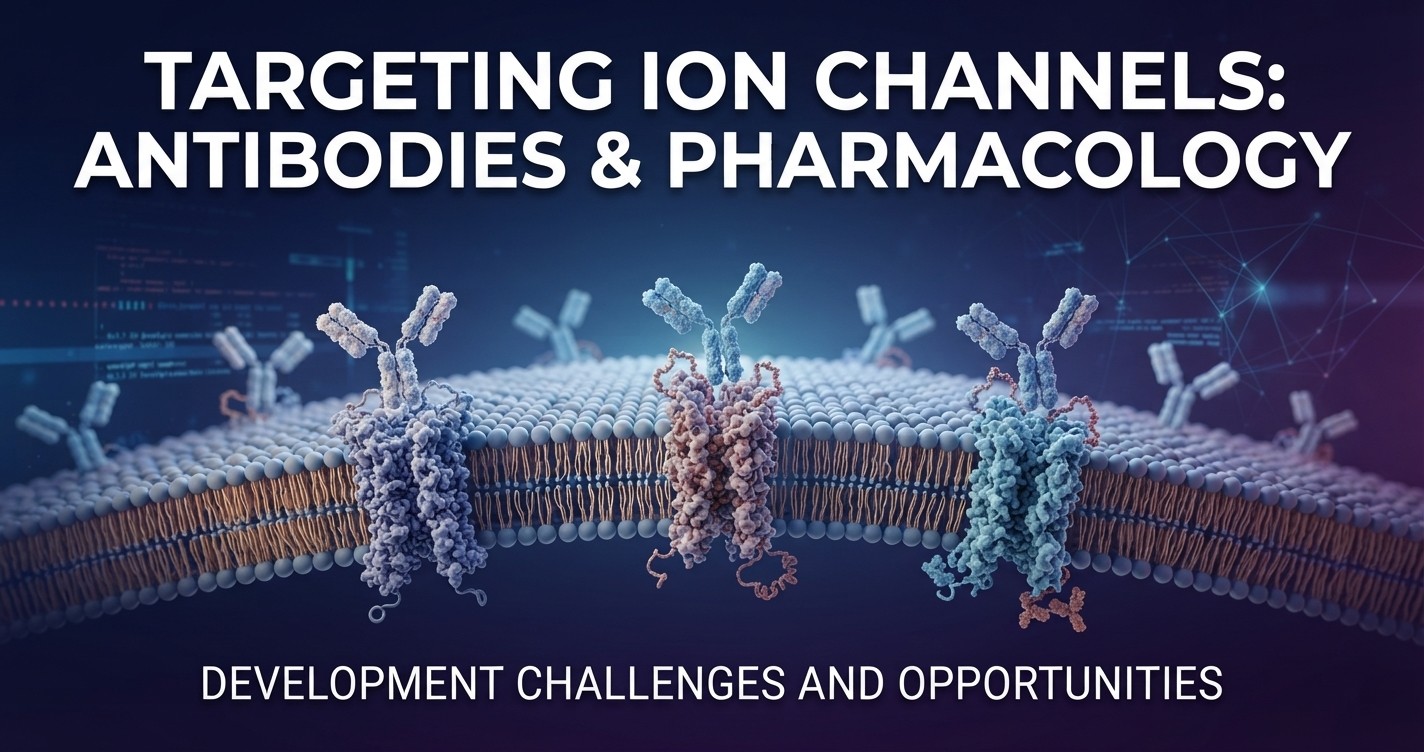 Ion channels as therapeutic antibody targets: development challenges and opportunitiesRead more ...
 -
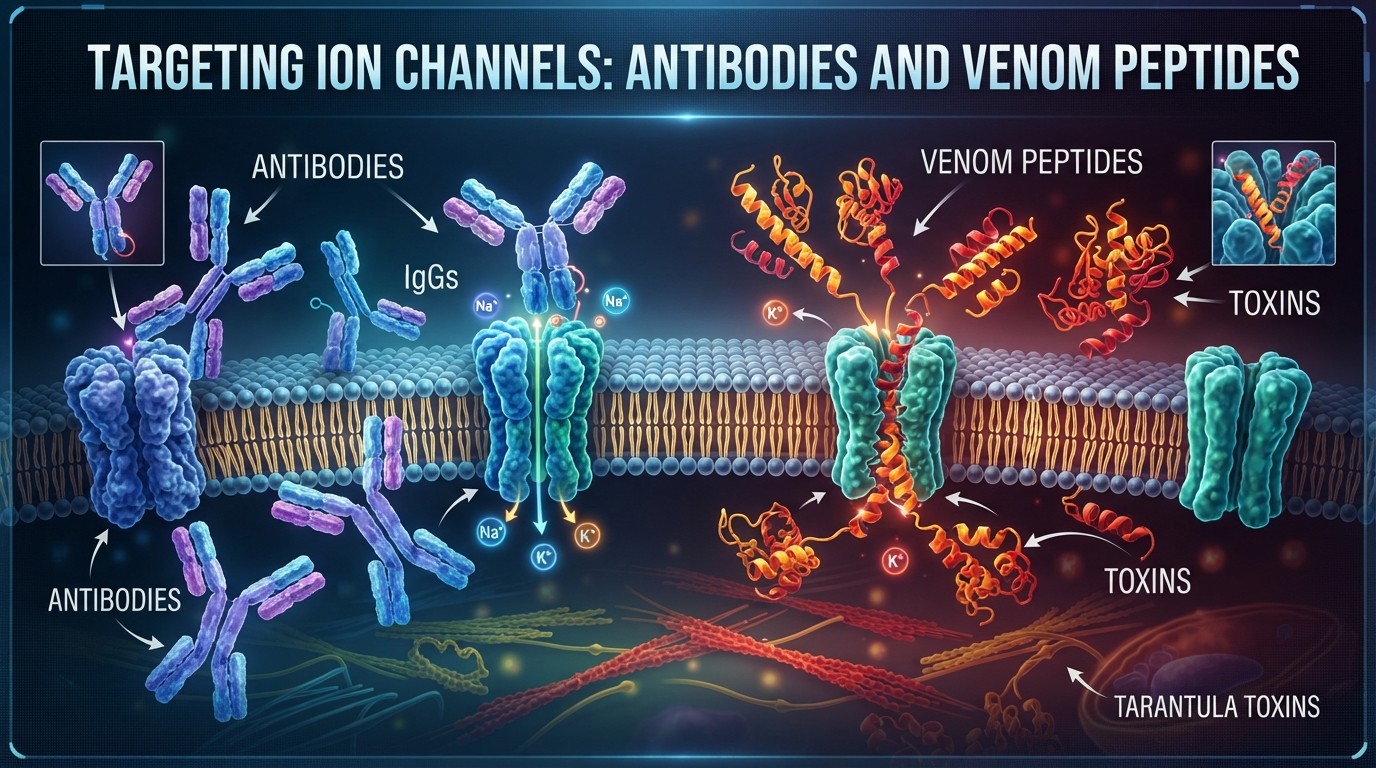 Antibodies and Venom Peptides: New Tools to Target Ion ChannelsRead more ...
Ion channels play fundamental roles in both excitable and non-excitable tissues, making them attractive molecular...
-
 RNA ELISA Kits: Laboratory Principles, Workflow Innovations, and Analytical ApplicationsRead more ...
Explore the comprehensive technical framework of RNA ELISA kits, detailing modern innovations in sensitivity,...
-
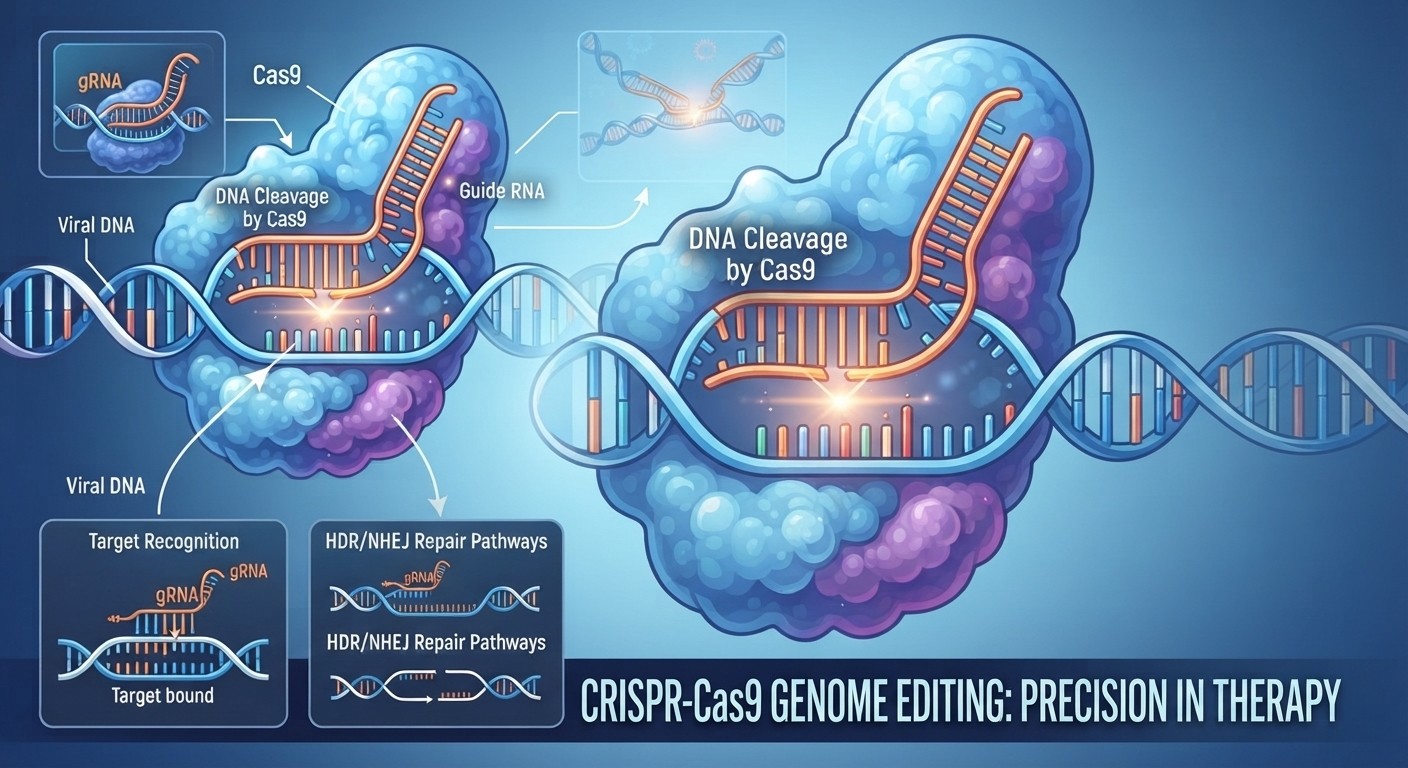 Translational HIV Therapy: Overcoming Resistance via Gene KnockoutRead more ...
Explore advanced translational research on overcoming viral escape mutations, targeting CCR5 host receptors, and...
-
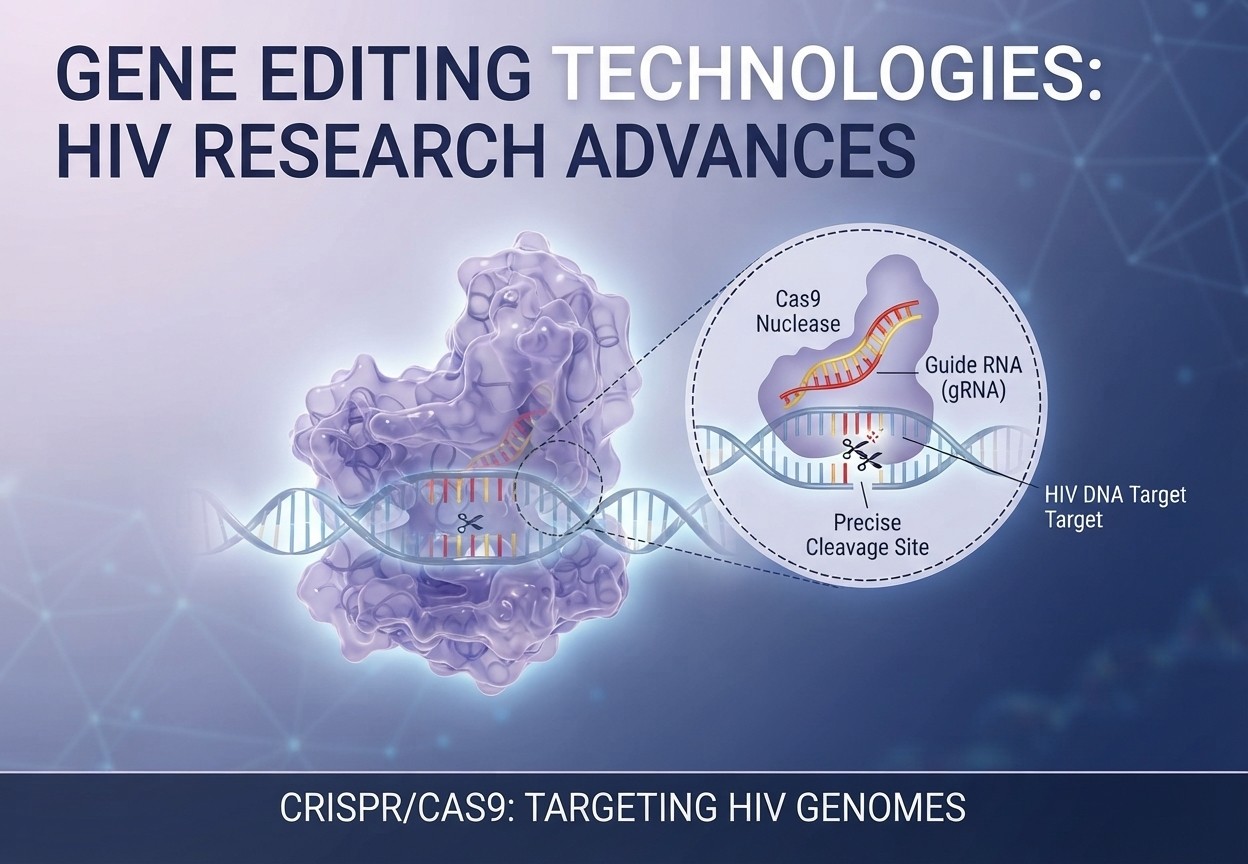 Gene Editing Technologies in HIV Research: Mechanisms & ApplicationsRead more ...
Discover how CRISPR/Cas9 and molecular gene editing tools are utilized in HIV research to target viral DNA, suppress...
Popular posts
-
RNA ELISA Kits: Laboratory Principles, Workflow Innovations, and Analytical ApplicationsExplore the comprehensive technical framework of RNA ELISA kits, detailing modern innovations in sensitivity,...Read more ...
-
Ion channels as therapeutic antibody targets: development challenges and opportunitiesComprehensive technical exploration of the challenges in targeting ion channels with antibodies, their structural...Read more ...
-
Antibodies and Venom Peptides: New Tools to Target Ion ChannelsIon channels play fundamental roles in both excitable and non-excitable tissues, making them attractive molecular...Read more ...
-
Gene Editing Technologies in HIV Research: Mechanisms & ApplicationsDiscover how CRISPR/Cas9 and molecular gene editing tools are utilized in HIV research to target viral DNA, suppress...Read more ...
-
Translational HIV Therapy: Overcoming Resistance via Gene KnockoutExplore advanced translational research on overcoming viral escape mutations, targeting CCR5 host receptors, and...Read more ...
Featured posts
-
Ion channels as therapeutic antibody targets: development challenges and opportunitiesComprehensive technical exploration of the challenges in targeting ion channels with antibodies, their structural...Read more ...
-
Antibodies and Venom Peptides: New Tools to Target Ion ChannelsIon channels play fundamental roles in both excitable and non-excitable tissues, making them attractive molecular...Read more ...
-
RNA ELISA Kits: Laboratory Principles, Workflow Innovations, and Analytical ApplicationsExplore the comprehensive technical framework of RNA ELISA kits, detailing modern innovations in sensitivity,...Read more ...
-
Translational HIV Therapy: Overcoming Resistance via Gene KnockoutExplore advanced translational research on overcoming viral escape mutations, targeting CCR5 host receptors, and...Read more ...
-
Gene Editing Technologies in HIV Research: Mechanisms & ApplicationsDiscover how CRISPR/Cas9 and molecular gene editing tools are utilized in HIV research to target viral DNA, suppress...Read more ...
Blog tags
Gene Editing Technologies in HIV Research: Mechanisms & Applications
Gene Editing Technologies in HIV Research: Mechanisms and Applications
Gene editing tools are transforming genetic engineering and offering new approaches to study and target viral diseases like HIV. Because HIV causes severe damage by attacking human immune cells—particularly T cells essential for adaptive immune responses—researchers are actively developing molecular intervention strategies.
The Role of CRISPR/Cas Systems
Originally discovered as part of adaptive immune systems in bacteria and archaea, CRISPR (Clustered Regularly Interspaced Short Palindromic Repeats) functions alongside Cas proteins to recognize and eliminate foreign genetic material like plasmids or bacteriophages.
- Molecular Scissors: Acting like molecular scissors, the CRISPR/Cas system cuts specific strands of DNA.
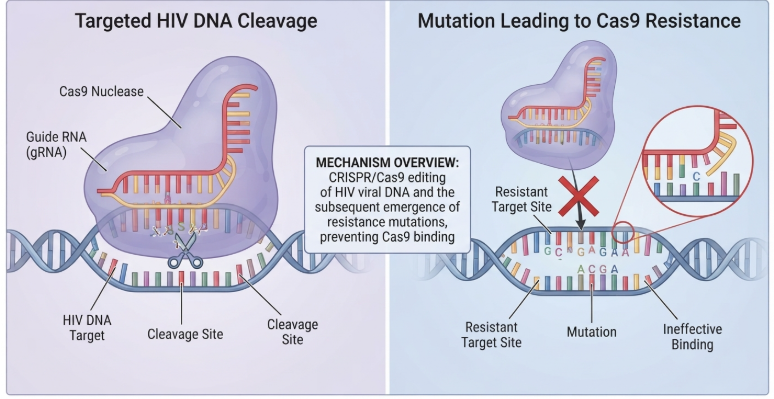
- CRISPR/Cas9 Adaptation: Adapted for mammalian research, CRISPR/Cas9 pairs the Cas9 endonuclease with an engineered guide RNA that binds to complementary nucleotide sequences on target DNA.
- Targeted Modification: This guidance mechanism allows researchers to introduce precise cuts, enabling the modification, insertion, or removal of DNA at targeted genomic locations.
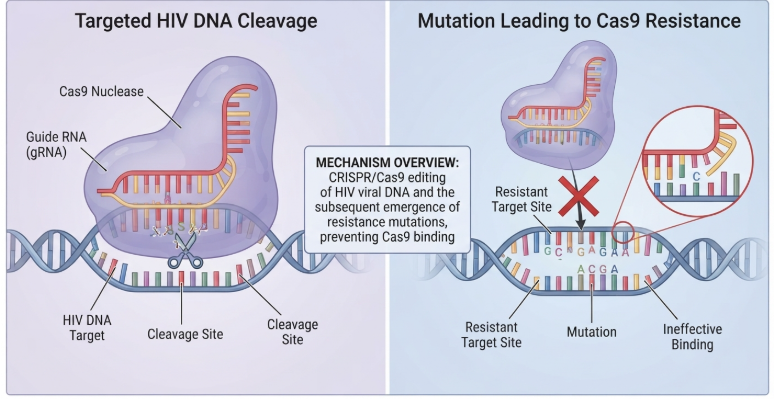
Figure 1: Illustration of the CRISPR/Cas9 system utilizing engineered guide RNA to direct the Cas9 endonuclease to specific target sequences for genomic cleavage.
Applications and Challenges in HIV Research
In laboratory models, scientists have designed RNA guides to direct Cas9 toward essential HIV viral genes or long terminal repeats. While this approach significantly suppressed viral production in various models (such as human pluripotent stem cells and CD4+ T cell lines), researchers observed that HIV can develop resistance mutations at cleavage sites, allowing the virus to evade Cas9 targeting.
Another promising strategy focuses on CCR5 ablation: CCR5 acts as a co-receptor required for specific strains of HIV to enter and infect T cells. Using CRISPR/Cas9 vectors or zinc-finger nucleases (ZFNs) to disrupt the CCR5 gene in stem cells helps create cells more resistant to infection. Zinc-finger nucleases (ZFNs) function similarly as molecular scissors by fusing a DNA-cleavage nuclease domain with a custom DNA-binding domain, and are evaluated in clinical research applications (such as SB-728-T trials) to block HIV entry pathways.
Available Research Products
- Human Chemokine Receptor Type 5 (CCR5), ELISA Kit (Catalog #MBS2020083)
- CRISPR/Cas9, Monoclonal Antibody (Catalog #MBS375383)
- S. Pyogenes CRISPR-Associated Protein-9 Nuclease, Recombinant Protein (Catalog #MBS140642)
- HIV (Human Immunodeficiency Virus) ELISA Kit (Catalog #MBS766122)
- HIV-2 gp39, Monoclonal Antibody (Catalog #MBS430025)
- HIV Gp41/gg36, Recombinant Protein (Catalog #MBS319756)
- HIV-1 p24, Monoclonal Antibody (Catalog #MBS8241470)
- HIV-1 Tat interactive protein 2 Monoclonal Antibody ELISA Kit (Catalog #MBS732587)
References
- Mojica FJ M, Rodriguez-Valera, F. The discovery of CRISPR in archaea and bacteria. 2016. FEBS J, 283: 3162-3169.
- Tschaharganeh DF, Lowe SW, Garipp RJ, Livshits G. Using CRISPR/Cas to study gene function and model disease in vivo. 2016. FEBS J, 283: 3194-3203.
- Liang C, Wainberg MA, Das, AT, Berkhout B. 2016. CRISPR/Cas9: a double-edged sword when used to combat HIV infection. Retrovirology, 13:37.
- Savic N, Schwank G. 2016. Advances in therapeutic CRISPR/Cas9 genome editing. Translational Res, 168:15-21.
Posted in:
Gene Pathway Analysis
Leave a comment
Log in to post comments